Your Nose Knows Something Your Brain Doesn't: Scent, Memory, and the Healing Aromas of Big Sur's Coastline
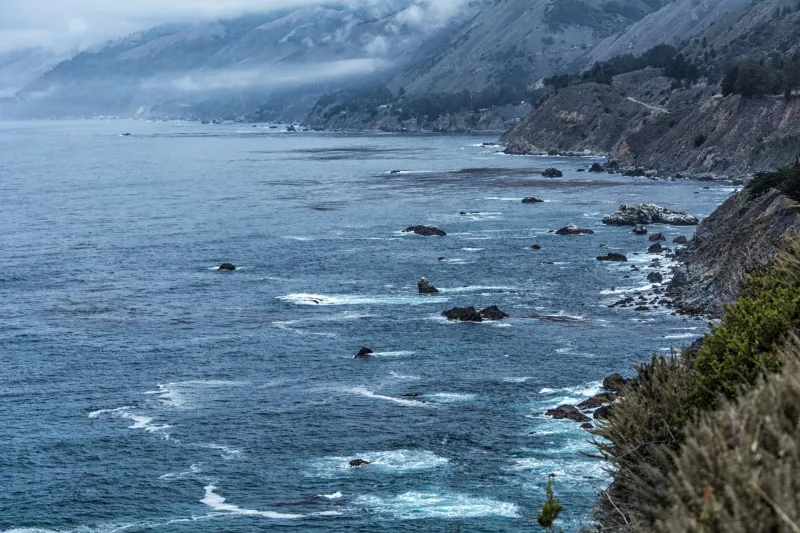
You're hiking a trail somewhere along the coastal bluffs, and then—without warning—something shifts. A gust comes off the Pacific. It carries salt, and sage, and something green and sharp underneath it all. Before you can name what you're smelling, your chest loosens. Your jaw unclenches. Maybe your eyes get a little wet, and you're not entirely sure why.
That's not a coincidence. That's your nervous system doing something it's been wired to do for hundreds of thousands of years. And the Big Sur coastline, with its extraordinary layering of botanical volatiles and ocean chemistry, might be one of the best places on Earth to let it happen.
Why Scent Gets There First
Every other sense you have takes a detour through the thalamus—the brain's central relay station—before it reaches the areas responsible for emotion and memory. Smell doesn't. Olfactory signals travel a direct route to the amygdala and hippocampus, the parts of your brain that store emotional experience and regulate your threat response. This is why a particular cologne can collapse you back into a memory from twenty years ago before you've even had a chance to think about it. It's not nostalgia. It's neuroanatomy.
This directness is also why scent is increasingly recognized in somatic healing work as one of the fastest pathways to accessing stored emotional material. Trauma researchers and body-based therapists have long observed that smell can unlock emotional states that years of talk therapy haven't touched—not because scent is magic, but because it bypasses the cognitive gatekeeping that so often keeps us from feeling what we need to feel.
The term for this is sometimes called "olfactory-evoked autobiographical memory," but you don't need the jargon to understand what it means: a smell can take you somewhere emotionally that your rational mind has been carefully avoiding.
What Big Sur's Air Is Actually Made Of
Big Sur isn't just scenic. It's chemically specific. The microclimate along this stretch of California coast creates a botanical atmosphere that's genuinely unlike anywhere else in the country, and the compounds floating through that air have measurable effects on human physiology.
California white sage (Salvia apiana) and the more common black sage that carpets the coastal scrub release volatile organic compounds—including cineole, camphor, and thujone—that have been studied for their effects on mood regulation and cognitive clarity. Indigenous Ohlone and Esselen peoples understood this relationship long before Western science got around to measuring it. Burning or simply being near sage in its native habitat produces a kind of biochemical quieting that's distinct from what you'd get from a sage bundle purchased at a wellness boutique. Context matters. Ecosystem matters.
Eucalyptus, which lines many of Big Sur's canyon roads in towering groves, releases eucalyptol (also called 1,8-cineole), a compound with documented anxiolytic properties. Inhaling it has been shown in multiple studies to reduce cortisol levels and lower systolic blood pressure. When you're driving Highway 1 with the windows down and that eucalyptus scent hits you, your body is already beginning to downregulate stress before you've even parked.
Sea spray is its own category entirely. Coastal air is rich in negative ions—electrically charged particles produced when waves crash and water molecules break apart. Research suggests that high concentrations of negative ions are associated with increased serotonin levels and reduced symptoms of anxiety and depression. The smell of the ocean isn't just evocative. It's actively doing something to your neurochemistry.
And then there's the layering—pine resin from the coastal pines, the faint mineral scent of fog-wet rock, the sweetness of coyote brush in bloom. Big Sur doesn't offer one healing scent. It offers an entire aromatic ecosystem, and your nervous system is receiving all of it simultaneously.
Scent as a Portal to Somatic Processing
Here's where it gets interesting for anyone doing healing work, whether that's grief processing, trauma recovery, or just the slower work of learning to feel safe in your own body.
Because olfactory signals reach the limbic system before the prefrontal cortex gets involved, scent has the ability to surface emotional material in a pre-verbal, pre-rational way. That can feel disorienting if you're not expecting it. Plenty of people have cried on Big Sur trails without knowing exactly why, or felt an inexplicable sense of grief lift somewhere between the trailhead and the bluff. This isn't woo. It's the body processing something it's been holding, given permission by an aromatic environment it recognizes as safe.
Somatic therapists sometimes use this intentionally—introducing specific scents during body-based therapy to help clients access emotional states that are otherwise hard to reach. The principle isn't complicated: if a smell can lock a memory in, it can also help unlock it for processing.
The Big Sur landscape offers this organically, without a therapist's office or a protocol. You just have to slow down enough to actually inhale.
How to Work With Scent Intentionally (Without Turning It Into a To-Do List)
This isn't about buying the right essential oils or following a aromatherapy protocol. This is simpler and more personal than that.
If you're visiting Big Sur, or even just spending time in any wild coastal or high-desert landscape, try arriving without earbuds. Breathe through your nose deliberately, especially in the first few minutes of a new environment. Notice what surfaces—not to analyze it, but to let it move through you. If something unexpected comes up emotionally, that's not a problem to solve. That's information your body has been waiting to share.
For those of us who can't get to Big Sur regularly, the practice of olfactory intention can still be meaningful at home. A small amount of sustainably sourced sage, a diffuser with eucalyptus oil, or even a jar of dried coastal herbs kept near a meditation space can serve as an anchor—not a replacement for the real thing, but a reminder to your nervous system of what it felt like to be held by that landscape.
The key is pairing the scent with stillness. Your olfactory system is most receptive when you're not rushing. Slow breathing, a quiet environment, and a willingness to notice what arises—that's the entire practice.
The Landscape Remembers, and So Do You
There's something quietly radical about taking scent seriously as a healing modality in a culture that's deeply visually oriented. We photograph everything. We describe healing in terms of what we saw, what we read, what we were told. But the body keeps its own records, and those records are often written in smell.
Big Sur's coastal plants have been releasing their compounds into that salt air for millennia. The Esselen people knew this land through all of their senses, including smell, long before anyone thought to run a clinical trial on it. What modern neuroscience is catching up to is something the land has always been offering: a direct line to the parts of yourself that don't respond to logic or willpower, but do respond to the smell of sage after rain, or eucalyptus in morning fog, or the cold mineral breath of the Pacific coming in off the water.
Your nervous system already knows how to receive it. You just have to get quiet enough to let it in.