Sleep Like the Coast Does: Using Big Sur's Light and Fog Cycles to Fix Your Circadian Rhythm at Home
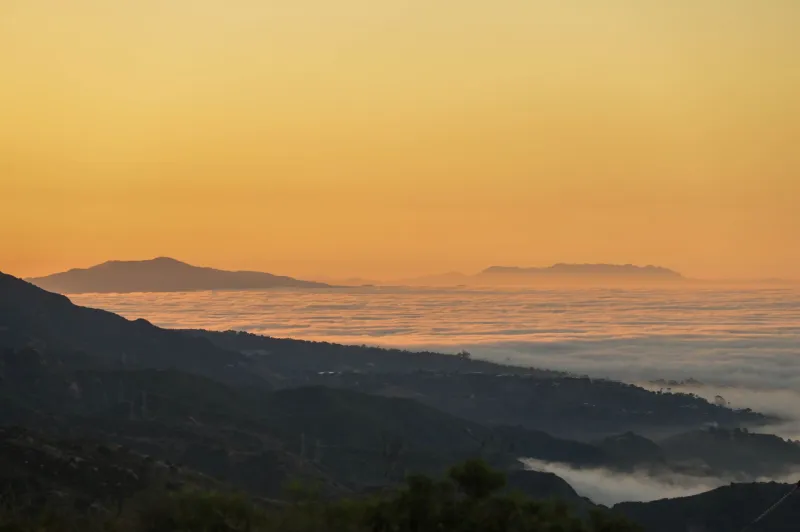
Most of us are running on borrowed time — specifically, borrowed light. We wake up to alarm clocks instead of sunrise, spend our days under fluorescent panels or in front of screens calibrated for maximum engagement, and wind down (if we wind down at all) with the same blue-white glow that's been blasting our retinas since 7 a.m. Then we wonder why we can't sleep.
The circadian rhythm — your body's internal 24-hour clock — didn't evolve for this. It evolved for something much closer to what happens along the Big Sur coastline every single day: a nuanced, dynamic interplay of light, shadow, mist, and darkness that shifts with the seasons in ways that are deeply, biologically legible to the human nervous system.
You probably can't move to Highway 1. But you can borrow some of what the coast knows.
What Makes Big Sur's Light Different
Big Sur isn't just scenic — it's atmospherically unusual. The region sits at the intersection of several microclimate forces that create lighting conditions you won't find in most parts of the country.
The Pacific Ocean acts as a massive temperature regulator, keeping coastal air cooler and more moisture-laden than the interior valleys. From late spring through midsummer, the famous June Gloom (which along Big Sur often stretches well into July and sometimes August) produces a thick marine layer that filters and diffuses morning light dramatically. Instead of a sharp, high-contrast sunrise, you get a gradual brightening — soft, cool, and slow. Photons arrive gently before the fog burns off, usually midday.
By late afternoon, when the marine layer retreats offshore, the light turns golden and warm. Sunsets here are often spectacular not because Big Sur is doing anything special, but because the ocean humidity scatters light in ways that produce long, low-angle rays rich in red and amber wavelengths.
And then, because there's minimal light pollution and no major urban sprawl to the west, darkness comes fully on clear nights. Not city dark. Real dark.
For your circadian system, this sequence — soft cool morning light, bright midday sun, warm amber evening, genuine darkness — is basically a masterclass in biological timing.
The Science Behind Why This Matters
Your circadian rhythm is primarily set by light hitting specialized photoreceptors in your eyes called intrinsically photosensitive retinal ganglion cells, or ipRGCs. These cells are most sensitive to short-wavelength blue light, which is abundant in morning sky light and signals to your brain: it's morning, suppress melatonin, start cortisol production, get moving.
As light shifts toward warmer, longer wavelengths in the evening, those same cells receive a different signal: wind down, prepare for sleep, begin melatonin release.
The problem for most Americans is that artificial light — especially LED screens and overhead lighting — mimics that blue-spectrum morning signal around the clock. Your brain is receiving wake-up instructions at 10 p.m. while you're lying in bed wondering why you're not tired.
Big Sur's natural light cycle essentially does the programming for you. The fog-filtered mornings deliver a gentler blue-light cue that rises gradually. The warm afternoon and evening light naturally transitions your system toward rest. And the darkness at night allows melatonin to do its job without interference.
Translating the Coast Into Your Home
Here's where this gets practical. You can't import the fog, but you can reverse-engineer the light logic.
Morning: Start Soft and Cool
Big Sur mornings are rarely harsh. If you live somewhere with intense early-morning sun — Phoenix, Dallas, Miami — consider using blackout curtains to delay direct sun exposure by 20 to 30 minutes, then opening them gradually. The goal is a gentler light ramp-up rather than an immediate blast.
Better yet, get outside within 30 minutes of waking for natural light exposure, even on overcast days. Cloudy light is still 10 to 50 times brighter than indoor lighting, and it's the right spectrum for morning cortisol signaling. If you're in a northern city like Chicago or Seattle where winter mornings are genuinely dark, a 10,000-lux light therapy lamp used for 20 to 30 minutes at breakfast can simulate the effect.
Midday: Let There Be Actual Light
One of the quiet gifts of Big Sur is that when the fog lifts, the midday light is bright. If you work indoors, you're almost certainly not getting enough midday light exposure, which matters for serotonin production and the downstream conversion to melatonin at night.
If possible, take your lunch outside. Even 15 minutes of midday sun exposure makes a measurable difference in sleep quality, according to research published in the Journal of Clinical Sleep Medicine. If you're stuck in an office, try positioning your desk near a window or taking a short walk before your afternoon slump hits.
Evening: Go Warm, Go Dim
This is where most people lose the game. The amber, low-angle light of a Big Sur evening is your model here. Around two hours before your target bedtime, start shifting your environment toward warmer, dimmer light.
Swap overhead fixtures for lamps with warm-toned bulbs (2700K or lower). Use your phone's Night Shift or a blue-light filter app. If you watch TV, lower the brightness and sit farther from the screen. Candles, if you're into them, are genuinely circadian-friendly — they emit almost no blue light.
The goal is to tell your nervous system: the day is ending. Because it is.
Night: Protect the Dark
Big Sur at night is genuinely, profoundly dark. Most of us aren't willing to live without streetlights, but we can create better darkness in our bedrooms. Blackout curtains, a sleep mask, covering LED indicator lights on devices — these aren't just comfort preferences. They're physiological interventions.
Even small amounts of light during sleep — a streetlight through thin curtains, a phone screen lighting up with notifications — can suppress melatonin and reduce the restorative quality of deep sleep stages.
Seasonal Adjustments (Because Big Sur Shifts Too)
One thing the coast teaches you is that the light changes with the season, and your sleep rhythms should too. In winter, Big Sur gets shorter days and longer, cooler nights — and the body naturally wants more sleep. In summer, the long evenings and late sunsets mean the system stays activated longer.
Rather than fighting your body's seasonal instincts with rigid schedules, try giving yourself a 30-minute sleep window that flexes with the time of year. Sleep researchers increasingly support what our ancestors and coastal ecosystems already knew: biological timing isn't a fixed clock. It breathes with the planet.
The Takeaway
Your circadian rhythm isn't broken. It's just starving for the right cues. Big Sur's atmospheric conditions — the fog, the ocean light, the warm evenings, the real dark — provide those cues in exactly the sequence your biology is looking for.
You don't have to be here to learn from the coast. You just have to start paying attention to light the way the coast always has: as something that moves, shifts, and carries meaning from morning all the way to dark.