Before You Set Your Intention, Learn Whose Land You're Standing On
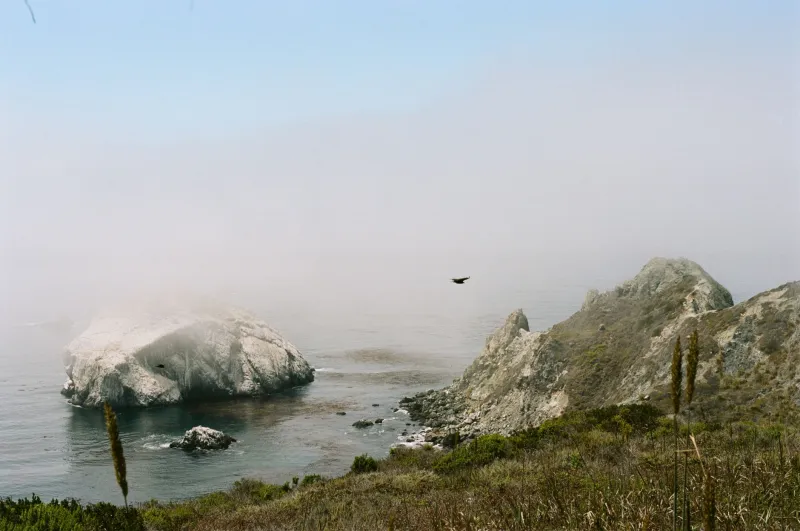
There's a version of spiritual tourism that's really just regular tourism with crystals. You arrive somewhere beautiful, you breathe deeply, you journal about your intentions, and you leave feeling renewed — without ever asking whose renewal you might be participating in, or whose history you might be moving through without acknowledgment.
We want to offer a different kind of visit.
Big Sur is extraordinary. The land here does something to people — opens them, quiets them, rearranges something inside. We've seen it happen over and over, and we believe it's real. But part of practicing genuine reverence for this place means understanding that its power didn't originate with the wellness industry, or with the Beat writers who romanticized it in the 20th century, or even with the ranchers and homesteaders who followed the Spanish missionaries. This land has been sacred — actively, intentionally, ceremonially sacred — for at least 10,000 years.
That's not a small thing to walk through on your way to a sound bath.
The People Who Have Always Called This Place Home
The Esselen Nation is the oldest known Indigenous group in California, with continuous presence in the Big Sur region dating back millennia. Their territory encompassed the Santa Lucia Mountains, the Big Sur River drainage, and significant stretches of the coast — the very landscapes that draw visitors today. The Esselen were considered extinct by colonial-era anthropologists, a convenient fiction that erased a people who had survived Spanish missionization, land theft, and forced relocation.
They are not extinct. The Esselen Tribe of Monterey County continues to fight for federal recognition, land repatriation, and the right to maintain their cultural and spiritual practices on ancestral land. That fight is ongoing right now, as you read this.
The Ohlone peoples — a collective of related groups including the Rumsen, Mutsun, and others — also hold deep connections to this coastal region, particularly in the northern reaches near what is now Carmel and the Salinas Valley. Like the Esselen, Ohlone communities have survived centuries of erasure and are actively working to reclaim cultural sovereignty.
Knowing these names matters. Using them matters. The land doesn't become more beautiful when we acknowledge this history — but our relationship to it becomes more honest.
What "Sacred Land" Actually Means
When we use the phrase sacred land in wellness contexts, we often mean something fairly loose: a place that feels special, that has good energy, that inspires contemplation. That's not wrong, exactly. But it's worth sitting with how thin that definition is compared to what sacred land means in Indigenous frameworks.
For Esselen and Ohlone peoples, specific locations in Big Sur are tied to creation stories, ceremony, ancestral burial, and living spiritual relationships that have been maintained across hundreds of generations. Certain springs, rock formations, groves, and coastal points aren't just evocative — they are active sites of cultural and spiritual practice, some of which cannot be shared publicly and were never intended for outside participation.
This creates a genuine tension for wellness seekers who come to Big Sur looking for spiritual experience. The land is offering something real. But some of what it's offering belongs to specific people in specific ways, and the appropriate response to encountering that is curiosity and restraint, not consumption.
The Difference Between Appreciation and Appropriation
This is where a lot of well-meaning visitors get tangled up. Nobody comes to Big Sur with bad intentions. People are genuinely seeking healing, connection, meaning. Those are good impulses.
But intention doesn't automatically translate to impact. Borrowing ceremonial elements — smudging with white sage, using medicine wheel frameworks, adopting sweat lodge practices — without understanding their origins, without relationship to the communities they come from, and without permission, causes real harm. It dilutes living traditions. It signals to Indigenous people that their practices are available for extraction in the same way their land was.
Appreciation looks different. It looks like learning. It looks like asking questions before assuming access. It looks like supporting Indigenous-led spaces rather than non-Native teachers who've packaged Indigenous aesthetics into retreat curricula.
Some specific ways to practice this while visiting Big Sur:
Research before you arrive. The Esselen Tribe of Monterey County has a website. Read it. Understand who is seeking federal recognition and why. Understand what land repatriation efforts are currently active in this region.
Support Indigenous-led businesses and cultural organizations. Seek out Native-owned art, food, and educational experiences. Money spent with Indigenous communities is one of the most direct forms of reciprocity available to visitors.
Leave ceremony to ceremony. If you want to mark your time in Big Sur with ritual, create something personal and original rather than borrowing from traditions you don't have a relationship with. Sitting in silence at sunrise is profound. You don't need to frame it as something it isn't.
Ask about land acknowledgment practices at any retreat center you visit. How a wellness space talks about the land — or doesn't — tells you a lot about its values.
Healing That Includes the Wound
There's a version of holistic healing that's really just self-care — individual, insular, focused on personal restoration. And look, we're not against personal restoration. It's part of what we offer here.
But the deeper tradition of healing — the kind that Indigenous communities have practiced for millennia — understands that individual wellness and collective wellness are not separate projects. You cannot fully heal in a landscape while ignoring the harm that was done to the people who have always tended it. The wound is part of the place. Acknowledging it is part of the practice.
This doesn't mean your retreat becomes a guilt exercise. It means it becomes more complete. When you arrive knowing whose land you're on, when you carry that awareness into your meditation or your hike or your time sitting by the river, something changes in the quality of your presence. You're no longer a tourist passing through. You're a guest, with all the responsibility and gratitude that implies.
The Esselen have a relationship with this land that spans longer than most civilizations have existed. We are newcomers here, all of us. The most genuinely spiritual thing we can do is act like it.