Dirt Under Your Fingernails Might Be the Best Medicine You've Never Tried
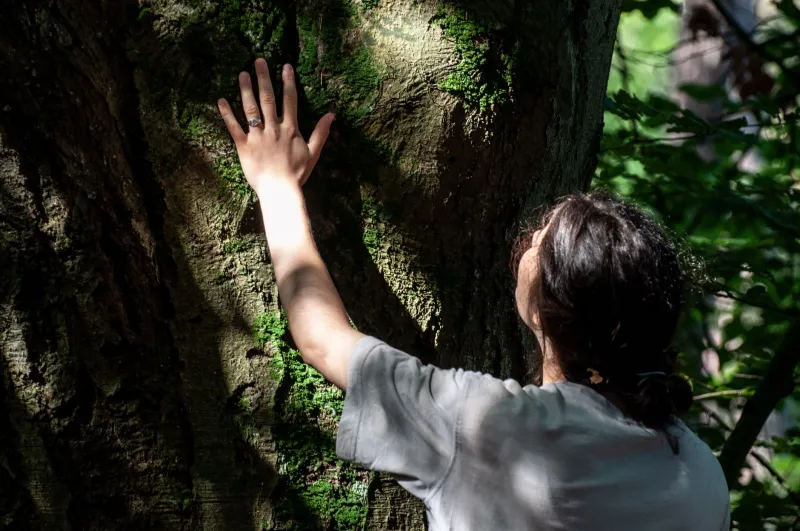
There's a moment that happens to a lot of people when they first arrive at Big Sur. Maybe you're kneeling beside a trail to look at something — a wildflower, a beetle, a root system pushing through the clay. You press your hand flat against the earth. And something shifts.
You might call it grounding. You might call it presence. But there's a third thing happening that you can't see or feel directly: a microscopic conversation between your skin and billions of organisms living in that soil. And according to a growing body of research, that conversation might be quietly rewriting your mental health, your immune function, and your sense of belonging to the world around you.
The Soil Is Not Just Dirt
Let's start here: healthy soil isn't an inert substance. It's one of the most biologically complex environments on the planet. A single teaspoon of forest soil can contain more microorganisms than there are people on earth. We're talking bacteria, fungi, archaea, protozoa, nematodes — an entire civilization living in what most of us walk right over without a second thought.
Big Sur's ecosystems are particularly rich in this microbial diversity. The coastal scrub, the redwood groves, the chaparral hillsides — each one hosts a distinct microbial community shaped by decades or centuries of ecological relationship. The land here hasn't been heavily farmed or developed. The soil is, in many places, genuinely ancient and intact in ways that most American landscapes simply aren't anymore.
When you make contact with that soil — when you garden, hike off-trail, sit on the ground, or let your kid roll around in it — you're not just getting dirty. You're getting introduced.
What Mycobacterium vaccae Has to Do With Your Anxiety
One of the most talked-about organisms in this space is Mycobacterium vaccae, a naturally occurring soil bacterium that researchers have been studying for its surprisingly potent effects on the brain. When mice were exposed to it, they showed measurable reductions in anxiety-like behavior and increased levels of serotonin in the prefrontal cortex. Follow-up research suggested the bacterium activates serotonin-producing neurons in ways that look a lot like what antidepressants do — without the side effects.
Let that sink in for a second. A microbe that lives in the ground can influence your brain chemistry.
More recent work has expanded this picture. Soil exposure appears to support the development of regulatory T cells, which help calm inflammatory immune responses — responses that are increasingly linked to depression, brain fog, and chronic stress. The so-called "old friends" hypothesis, developed by immunologist Graham Rook, proposes that humans co-evolved with soil and environmental microbes over millions of years, and that our immune systems actually need this microbial input to function properly. When we don't get it, the system gets dysregulated. And a dysregulated immune system is a anxious, inflamed one.
In other words: your nervous system might be craving the earth the same way it craves sleep or sunlight.
The Gut-Brain Axis Gets Dirty
Here's where it gets even more interesting. The gut-brain axis — the two-way communication highway between your digestive system and your central nervous system — is heavily influenced by the microbiome living in your intestines. Most people have heard by now that gut health affects mood. But fewer people know that environmental microbial exposure, including from soil, can actually shape the composition of your gut microbiome over time.
When you inhale soil particles on a trail, handle plants with bare hands, eat food grown in living soil, or simply spend extended time in a biodiverse natural environment, you're introducing microbial diversity into your system through multiple entry points. Some of these organisms take up residence. Others just pass through — but even transient visitors can stimulate immune responses and gut signaling that influence how you feel emotionally.
Researchers are still mapping exactly how this works, but the directional evidence is consistent: people who spend more time in natural, microbially rich environments tend to have more diverse gut microbiomes. And microbiome diversity is one of the strongest markers we have for emotional resilience, immune strength, and even cognitive flexibility.
Grounding as Biology, Not Just Metaphor
Spiritual traditions from Indigenous land practices to modern ecotherapy have long described a felt sense of connection that comes from direct contact with the earth. In wellness culture, we call it grounding. We talk about it in terms of energy, presence, nervous system regulation.
What's striking is how well the biology actually maps onto this. When you sit barefoot on the soil at Big Sur — on a bluff above the Pacific, or beneath the redwood canopy, or in the garden beds at a retreat space — your body is doing something genuinely restorative at a cellular level. Your skin is absorbing electrons from the earth's surface (that's the physics side of grounding research). Your immune system is receiving microbial signals that say: you're in a living place, you're part of a living system, stand down from high alert.
The felt sense of belonging that people describe in these moments? It might not be purely psychological. It might be your body receiving information it's been waiting for.
How to Actually Let the Soil In
You don't need to eat dirt (please don't). But there are genuinely accessible ways to increase your soil microbe exposure, whether you're visiting Big Sur or trying to bring some of this practice home.
Get your hands in actual earth. Gardening is the most well-studied route. Even 30 minutes of gardening in living soil has been shown to reduce cortisol levels. If you're at a retreat or staying somewhere along the coast, ask about garden spaces. Many wellness properties in Big Sur have working gardens specifically for this reason.
Walk barefoot where it's safe. Grass, forest paths, beach sand — all of these provide skin contact with environmental microbes. It doesn't have to be dramatic.
Spend time in old-growth or minimally disturbed ecosystems. The microbial diversity in ancient, undisturbed land is meaningfully different from a city park or a manicured lawn. Big Sur's protected lands are a genuine resource here.
Eat food grown in living soil. Industrial agriculture strips microbial diversity from soil and from food. Locally grown, organically farmed produce — especially from small farms using regenerative practices — carries more microbial complexity. Farmers markets along the Central Coast are a good place to start.
Slow down enough to make contact. This is the part that gets missed. You have to actually stop. Sit down. Touch the ground. Let the experience be sensory, not just scenic.
Coming Home to a Place You've Never Been
A lot of people who spend time in Big Sur describe feeling inexplicably at home here — even on a first visit. Some of that is the staggering beauty, sure. But some of it might be this: the land is teeming with life, and that life recognizes you. Your immune system, your gut, your nervous system — they've been waiting for this kind of input. When the soil gives it to them, something settles.
Science is still building the vocabulary to describe what healers and land-keepers have known for a long time. But the direction is clear. The earth isn't just a backdrop for your wellness practice. It's an active participant in it.
Get your hands dirty. Your microbiome will thank you.