Your Gut Has Been Waiting for This Dirt: The Wild Microbiology of Big Sur and What It Does to Your Insides
Most of us arrive at Big Sur thinking we're coming for the views. The cliffs, the fog rolling in off the Pacific, the redwoods standing around like they've seen everything and aren't impressed. And sure — all of that matters. But there's something else happening when you step off Highway 1 and into the actual land. Something invisible, ancient, and genuinely weird in the best possible way.
You're walking into a microbial ecosystem that exists almost nowhere else on Earth. And your gut already knows it.
What "Place-Based Microbiology" Actually Means
Here's the part that tends to blow people's minds a little: the microbiome isn't just inside you. It's everywhere. Every landscape has its own microbial fingerprint — a specific community of bacteria, archaea, fungi, and other microscopic organisms shaped by that region's soil chemistry, plant life, climate, and thousands of years of ecological history.
Big Sur's fingerprint is particularly distinct. You've got coastal sage scrub, ancient redwood groves, chaparral, kelp forest-influenced sea air, and a fog belt that creates its own mini-climate. Each of these zones harbors different microbial populations. And when you spend time in them — breathing, touching, sitting on the ground, walking barefoot on a trail — those organisms are interacting with your own internal microbial community in ways that are only now beginning to be scientifically understood.
Researchers studying what's sometimes called the "old friends hypothesis" have found that human immune systems evolved in close contact with the microbial diversity of natural environments. When we lose that contact — as most Americans have, living in sanitized urban spaces — our immune systems essentially lose their sparring partners. The result isn't just more allergies and autoimmune conditions, though those are certainly part of the picture. It's a gut microbiome that's less diverse, less resilient, and less capable of regulating inflammation.
Why Big Sur Specifically — Not Just "Any Nature"
This is where it gets interesting, because not all natural environments are equivalent from a microbiological standpoint. A manicured city park and an old-growth coastal forest are not offering your gut the same thing.
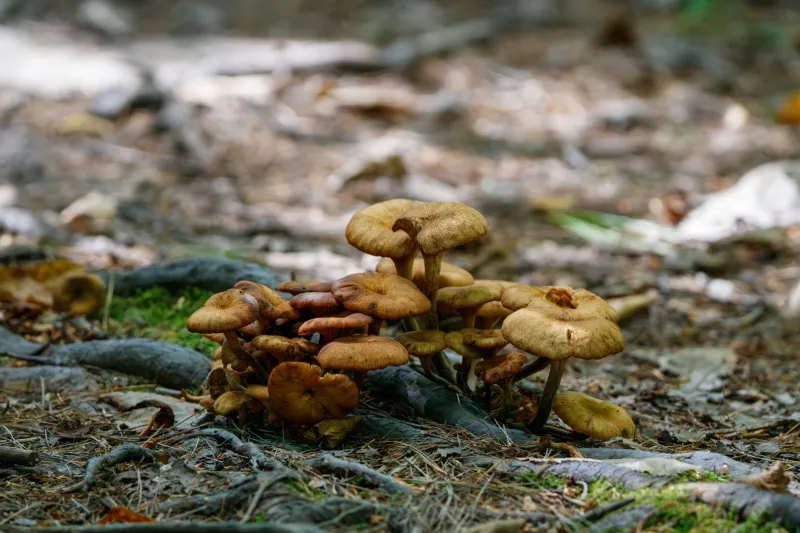
Big Sur's relative inaccessibility has been, biologically speaking, a gift. The region hasn't been heavily farmed, extensively developed, or subjected to the kind of chemical saturation that's depleted microbial diversity in so many American landscapes. The soil here is genuinely ancient in its complexity. The redwood groves harbor fungi — including mycorrhizal networks that connect trees across acres of forest floor — that create a microbial environment with enormous diversity.
Then there's the marine layer. That iconic Big Sur fog isn't just atmospheric drama. Sea air carries aerosolized organic compounds, including marine-origin microorganisms and the byproducts of kelp decomposition, that have measurable effects on the respiratory microbiome. Studies on coastal air exposure have found links to reduced inflammatory markers and shifts in immune cell behavior that inland environments simply don't produce.
And the soil itself — particularly in areas where the land hasn't been disturbed — contains Mycobacterium vaccae, a naturally occurring bacterium found in healthy wild soil that has been studied for its effects on serotonin regulation. Yes, the dirt here might literally be making you calmer. The science on this is still developing, but early findings are hard to ignore.
The Gut-Brain Connection You're Activating Without Knowing It
Your gut microbiome and your nervous system are in constant conversation through what researchers call the gut-brain axis. The state of your gut — how diverse it is, how balanced its bacterial populations are, how well its lining is functioning — directly influences mood, stress response, sleep quality, and cognitive clarity.
When you come to Big Sur and spend a few days genuinely immersed — eating outside, lying in the grass, walking through damp forest trails — you're essentially gifting your gut microbiome a new set of inputs. Novel bacterial strains. Fungal spores. Organic compounds from plants your immune system has never encountered. This isn't dangerous; it's the kind of exposure your biology was designed for over hundreds of thousands of years of evolution.
Many people who visit report feeling a kind of mental clarity or emotional ease that they attribute to the scenery or the slower pace. Those things matter. But some of what they're feeling may be happening at a microbial level — a recalibration of the gut-brain axis that kicks in after 48 to 72 hours of genuine immersion in a biodiverse natural environment.
How to Actually Build This Into Your Practice
If you're lucky enough to visit Big Sur, be intentional about contact with the land itself. Sit on the actual ground. Take your shoes off on a forest trail. Let yourself touch tree bark, pick up a handful of soil, wade into a creek. These aren't just romantic gestures — they're biological transactions.
Eat as locally as possible while you're here. The produce grown in coastal California soil carries microbial traces of this specific ecosystem. Farmers markets in the region, including those in nearby Carmel Valley and Monterey, are worth a detour.
For the times when you can't make the drive down Highway 1, there are ways to keep this microbial conversation going at home:
- Get your hands in living soil regularly. Container gardening counts. Community garden plots are even better. The key is unsterilized, biologically active soil — not the bagged stuff that's been heat-treated.
- Eat fermented foods made with regionally grown produce. Fermentation amplifies the microbial diversity of whatever it starts with. Local kimchi, kraut, or kefir made from California-grown ingredients is a proxy for place-based exposure.
- Spend time near water — especially moving water. Streams, rivers, and coastlines generate aerosols rich in environmental microorganisms. Even a few hours near a creek changes your respiratory microbiome in measurable ways.
- Reduce the antibacterial products in your home. Triclosan and similar compounds don't just kill pathogens — they flatten the microbial diversity of your living environment. Your gut picks up cues from your home environment too.
The Land Is Already Trying to Help
There's something quietly radical about understanding your body as a permeable, ecologically embedded thing — not a sealed container moving through the world, but a participant in it. Your gut microbiome is, in a very real sense, a record of every place you've spent significant time. Every ecosystem you've been part of.
Big Sur's particular combination of ancient soil, marine air, old-growth fungi, and undisturbed plant communities makes it one of the more potent microbial environments you can step into on the West Coast. The land here has been doing this work for a long time — long before wellness became an industry, long before anyone thought to put it into words.
Your gut already knows how to receive it. You just have to show up and let the contact happen.