When Did You Last Actually Smell Something? How Big Sur's Coastal Air Heals the Loneliest Parts of Your Brain
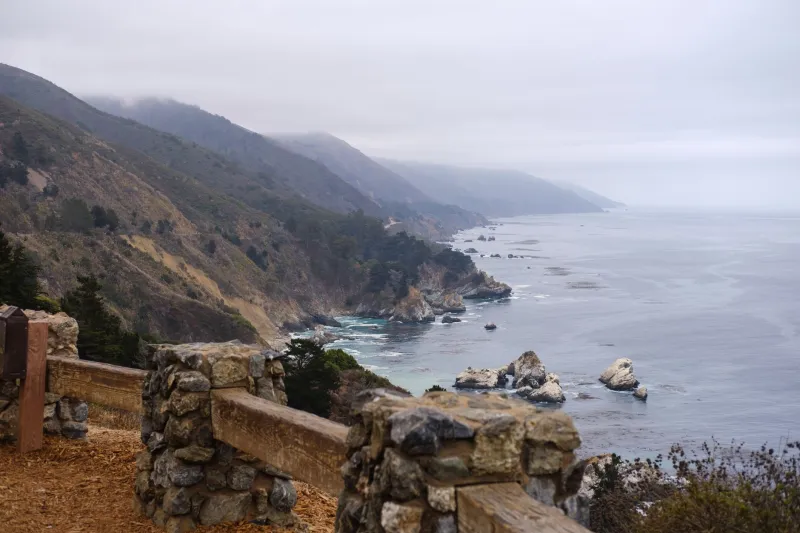
There's a particular smell that hits you the moment you step out of your car somewhere along Highway 1. It's not one thing — it's a whole conversation. Salt. Kelp drying on sun-warmed rocks. The resinous exhale of Monterey cypress. Something mineral and ancient coming up off the cliffs. And underneath all of it, that cool, damp fog-breath that Big Sur seems to keep year-round.
Most people just call it "fresh air" and move on.
But your brain? Your brain is doing something much more complicated. And if you've been feeling disconnected, isolated, or just vaguely numb to the world — which, let's be honest, describes a lot of us right now — that scent landscape might be doing more therapeutic work than you're giving it credit for.
The Loneliness Epidemic Is Also a Sensory Problem
By now, most of us have heard the statistics. Loneliness in the US has reached what the Surgeon General officially called an epidemic. Nearly half of American adults report feeling measurably alone on a regular basis. And while we tend to talk about loneliness as an emotional experience, the research tells a more physical story.
Chronic social isolation changes your nervous system. It keeps your threat-detection circuits on high alert, floods your body with low-grade cortisol, and — here's the part that doesn't get talked about enough — it actually dulls your sensory processing. When you're lonely, your brain starts to perceive the external world as less safe and less rewarding. You stop noticing things. Colors feel flatter. Food tastes blander. And your sense of smell, which is more directly wired into your emotional brain than any other sense, quietly starts to shut down.
This isn't metaphor. Olfactory sensitivity is measurably reduced in people experiencing prolonged loneliness and depression. Your nose, in a very real neurobiological sense, stops working as well when you're isolated.
Which means that reconnection isn't just about finding people. It's about reopening your senses to the world.
Why Smell Is the Fastest Route Back
Unlike every other sense, smell bypasses the thalamus — the brain's main sensory relay station — and goes directly to the limbic system. That's your emotional processing center. It's also where memory lives, where social bonding is regulated, and where your sense of safety gets calibrated.
When you smell something, you're not getting a filtered, processed signal. You're getting a raw, immediate hit straight to the parts of your brain that decide whether you feel connected or alone, safe or threatened, present or checked out.
This is why a particular scent can pull you back to a childhood memory in half a second flat. It's also why certain smells make you feel calm before your conscious mind has even registered what you're smelling. And it's why deliberately engaging with complex, layered scent environments — the kind you find in genuinely wild places — can start to reverse the sensory shutdown that loneliness causes.
Your olfactory system isn't just a receptor for pleasant aromas. It's one of the primary channels through which your brain decides whether you belong somewhere. Whether the world is worth engaging with. Whether you're home.
What Big Sur's Scent Profile Is Actually Doing to You
Big Sur doesn't have one smell. It has a rotating, layered, seasonally shifting scent ecology that changes by the hour depending on tide, temperature, fog density, and wind direction. That complexity is part of what makes it so neurologically interesting.
Salt spray and oceanic air carry negative ions in concentrations that are genuinely rare outside of coastal and waterfall environments. Negative ion exposure has been linked to increased serotonin levels, reduced anxiety, and improved mood — effects that start within minutes of exposure and compound over time.
Kelp and marine algae release dimethyl sulfide as they dry and decompose, a compound that many researchers believe activates ancient neurological associations with abundant, resource-rich environments. Evolutionarily, coastal zones were survival goldmines. Your brain may still remember that.
Monterey cypress and coastal sage contribute volatile terpene compounds — particularly alpha-pinene and camphor — that have documented effects on cortisol reduction and parasympathetic nervous system activation. These are the same compounds that make forest bathing research so compelling, just delivered in a coastal rather than woodland context.
Mineral cliff air, that particular chalky, almost electric scent that comes off Big Sur's ancient rock faces, adds another layer of olfactory complexity that keeps your sensory system actively engaged rather than habituated. Your nose doesn't get bored here, which means your brain doesn't either.
Taken together, this scent profile creates a kind of full-spectrum olfactory stimulation that is genuinely hard to replicate anywhere else. And that stimulation is doing real neurobiological work — reopening sensory pathways, down-regulating threat responses, and nudging your limbic system toward the kind of open, receptive state where social bonding becomes possible again.
Intentional Scent Engagement: What to Do When You're Here
Most people walk through Big Sur smelling it passively, the way you hear background music in a coffee shop. There's value in that. But there's a different quality of healing available when you engage intentionally.
Slow down and breathe through your nose for five full minutes with no other agenda. Sit near the kelp line at low tide and just let the air move through you. Cup a sprig of coastal sage in your palms and hold it close before you inhale. Touch the bark of a cypress and then bring your fingers to your nose. These aren't precious rituals — they're ways of telling your nervous system that you're actually here, that you're safe enough to pay attention, that the world is worth sensing again.
That signal, repeated over the course of a retreat or even a single long afternoon on the coast, starts to accumulate. The sensory shutdown of chronic loneliness doesn't reverse overnight. But it does begin to reverse.
Bringing It Home: Accessible Scent Practices That Actually Work
You can't bottle Big Sur — and honestly, you shouldn't try. But you can build a scent practice at home that keeps your olfactory system engaged and your limbic pathways primed for connection.
High-quality essential oils made from coastal sage, cypress, and sea botanicals can serve as anchors for the neurological state you found on the coast, especially if you use them mindfully rather than just diffusing them in the background. The key is active attention — holding the scent, breathing slowly, letting your brain fully register what it's receiving.
Spend time outside in whatever natural environment you have access to. A city park after rain, a farmers market full of fresh herbs, a single potted rosemary plant on a fire escape — your olfactory system is hungry for complexity, and it doesn't require perfection. It requires presence.
And if you can get back to a genuinely wild place — the coast, the mountains, the desert, anywhere the air hasn't been filtered through HVAC systems and synthetic fragrance — do it as often as you can manage. Your nose will remember. And slowly, so will the rest of you.
The Scent of Belonging
Loneliness tells you that connection is somewhere out there, waiting for you to find the right person or the right community or the right version of yourself. But your nervous system doesn't experience belonging as an abstract concept. It experiences it as sensation — as the particular quality of air on your skin, the smell of a place that feels safe, the sensory fullness of being genuinely present somewhere.
Big Sur's wild aromatherapy isn't a cure for the loneliness epidemic. But it is a doorway back into your own senses. And sometimes, reopening your senses is exactly how you find your way back to the world.
Come smell something real. Your brain has been waiting.