Your Body Arrived at Big Sur Before You Did: The Science of Somatic Belonging
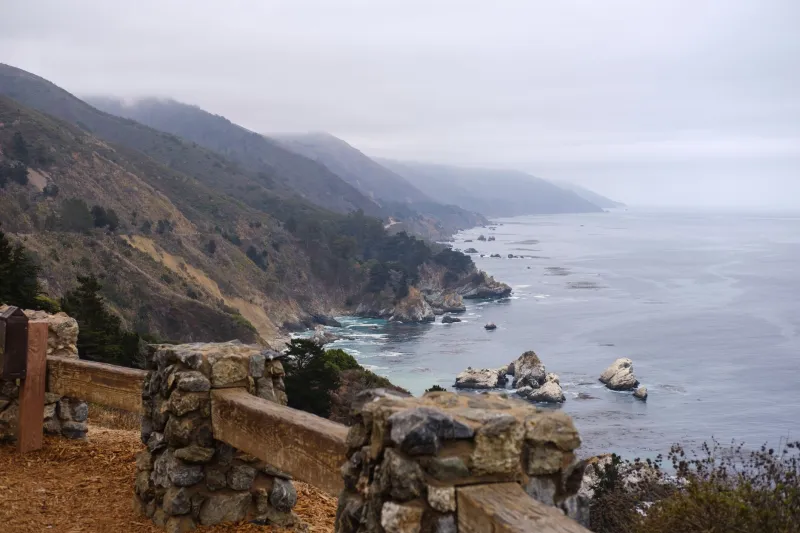
There's a moment most people experience the first time they reach Big Sur — a sudden exhale, a loosening in the chest, something that feels less like arrival and more like recognition. That's not poetry. That's your nervous system doing something your rational mind hasn't caught up to yet.
You're still processing the drive, still thinking about where to park or whether you remembered to charge your phone. But your body? Your body already knows where it is. And it's responding accordingly.
This isn't woo. This is biology. And once you understand what's actually happening inside you when you step onto this coast, you might start treating your body's instincts with a lot more respect.
What Somatic Intelligence Actually Means
We've been trained — by school, by culture, by a whole lot of productivity podcasts — to trust our thinking minds above everything else. If it can't be reasoned through, it doesn't count. But somatic intelligence is the idea that the body carries its own form of knowing, one that processes environmental information faster and often more accurately than conscious thought.
Your body is running thousands of micro-assessments every second. Air quality. Sound frequencies. Light levels. Temperature gradients. The smell of salt and sage and something green and alive. It's gathering data constantly, and it's drawing conclusions — about safety, about threat, about whether this is a place where you can finally let your guard down.
In most modern environments, that assessment comes back with a low-grade warning signal. Not danger exactly — just vigilance. Stay alert. Keep moving. Don't fully rest.
Big Sur often triggers something different.
The Vagus Nerve Is Your Internal Coast Guard
At the center of this story is the vagus nerve — the longest cranial nerve in the body, running from your brainstem down through your heart, lungs, and digestive tract. It's the main highway of your parasympathetic nervous system, the one responsible for rest, digestion, and recovery. When it's activated, your heart rate slows, your muscles soften, your digestion comes back online. You feel safe.
The vagus nerve is exquisitely sensitive to environmental input. It's picking up on things you'd never consciously notice — the infrasound frequencies generated by ocean waves, the negative ion concentration in coastal air, the particular acoustic quality of wind moving through a canyon. These aren't abstract wellness concepts. They're real physical signals, and your vagus nerve is reading all of them.
Researchers have found that natural soundscapes — especially those involving water — activate the parasympathetic nervous system in measurable ways. The rhythmic, non-threatening, slightly unpredictable pattern of waves is particularly effective. It's stimulating without being alarming. Your nervous system interprets it as safe complexity, the kind of sensory input that says you don't need to be on guard here.
Big Sur delivers that signal in surround sound.
Why This Place Feels Like Home Even If You've Never Been Here
Here's the part that surprises people: you don't have to have a personal history with Big Sur for your body to respond to it like home. That feeling of recognition — the one that makes first-time visitors go quiet and look around like they're trying to figure out why this feels so familiar — isn't nostalgia. It's something older.
Evolutionary biologists use the term biophilia to describe our innate affinity for natural environments, particularly ones that would have signaled abundance and safety to early humans. Open views with places to shelter. Fresh water nearby. Diversity of plant life. The presence of large, ancient trees. Coastal access.
Big Sur checks every single one of those ancestral boxes.
Your nervous system isn't comparing this landscape to your childhood backyard. It's comparing it to something encoded much deeper — a template for what safety and belonging look like that's been passed down through hundreds of thousands of years of human evolution. When the environment matches that template closely enough, the body responds with something that feels, from the inside, a lot like coming home.
The Gap Between What Your Body Knows and What Your Mind Accepts
Here's where it gets interesting — and honestly, a little uncomfortable for most of us.
There's often a significant lag between what your body is already experiencing and what your conscious mind is willing to accept. Your shoulders have already dropped. Your breathing has already slowed. But your brain is still running its usual commentary: Is this really working? Shouldn't I be doing something? How long until I feel better?
That gap — between somatic reality and mental skepticism — is one of the core challenges of modern healing. We've been so thoroughly conditioned to dismiss body-based knowledge that we sometimes can't feel our own healing even while it's happening.
One of the most valuable things about spending time in a place like Big Sur is that the signal is strong enough to eventually break through. The landscape doesn't negotiate with your inner critic. It just keeps delivering — the light, the sound, the smell, the temperature, the sheer scale of it. And at some point, even the most skeptical nervous system runs out of reasons to stay defended.
Learning to Listen Before You Think
So what do you actually do with this information? How do you get better at trusting what your body already knows?
Start small. When you arrive somewhere new — or even somewhere familiar — pause before you start assessing it mentally. Notice what your body does first. Does your breath change? Does something in your chest open or tighten? Does your jaw soften or clench? These aren't random reactions. They're data.
If you're visiting Big Sur, resist the urge to immediately pull out your phone and photograph everything. Give your nervous system a few minutes to just receive the place. Stand still. Let the sensory information come in without filtering it through a caption or a hashtag. Your body will tell you something true if you give it the space to do so.
And if you can't get to the coast right now? Find the closest version of that sensory input available to you. Moving water. Unstructured natural sound. Open sky. Bare feet on actual ground. Your vagus nerve isn't picky about the source — it just needs the signal.
The Body Has Always Known This
There's something quietly radical about taking your body's intelligence seriously. In a culture that prizes analysis, optimization, and rational decision-making above almost everything else, trusting the exhale — trusting the loosening in your chest when you reach a stretch of wild coast — feels almost transgressive.
But your body has been navigating this world a lot longer than your conscious mind has. It knows what safety feels like. It knows what healing feels like. And sometimes, standing on a cliff in Big Sur watching the fog move in off the Pacific, it knows something your mind is still trying to figure out.
Let it lead for a while. See what it knows.