Why Your Body Slams the Brakes Right Before a Breakthrough (And What Big Sur's Cliffs Can Teach You About That)
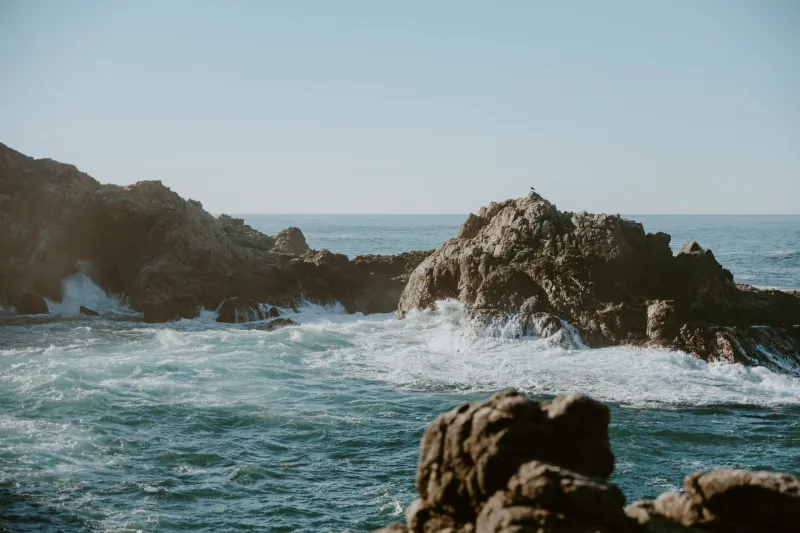
You drive down Highway 1, windows down, the Pacific crashing somewhere below you. You've been planning this trip for months. You find your cabin, breathe in the salt air, sit down on a rock overlooking the water — and then, out of absolutely nowhere, you want to leave.
Not because anything is wrong. Because something is right. And your body, bless it, doesn't trust that yet.
This is what some somatic therapists call the flinch response — that moment when your system detects genuine safety and genuine healing potential, and immediately throws up a wall. It shows up as restlessness, irritability, a sudden obsessive need to check your email, or the overwhelming conviction that you left the stove on back in Sacramento. It's your nervous system doing what nervous systems do: protecting you from the unfamiliar. Even when the unfamiliar is good.
Your Nervous System Isn't Broken — It's Overcautious
Here's the thing that doesn't get talked about enough in wellness spaces: healing isn't just uncomfortable. Sometimes it triggers a full-on physiological alarm. When you've been operating in survival mode for years — and most of us in modern America have — your body develops a kind of loyalty to stress. Cortisol becomes your baseline. Tension becomes your resting state. And when something comes along to disrupt that, your system flags it as a threat.
Researchers who study the autonomic nervous system describe this as a kind of homeostatic defense. Your body isn't trying to keep you sick. It's trying to keep you predictable. Predictable feels survivable. Calm, deep, unstructured rest? That's foreign territory. And foreign territory gets treated like danger until proven otherwise.
So that urge to bolt, to scroll, to fill the silence with noise — it's not a character flaw. It's a physiological flinch. And it happens to almost everyone who comes to a place like Big Sur with serious healing on the agenda.
What the Cliffs Already Know
Big Sur doesn't heal you fast. That's actually the whole point.
The cliffs along this coastline have been shaped by roughly 100 million years of patient, relentless geological process. The Santa Lucia Mountains didn't rush. The ocean didn't negotiate a faster timeline. Erosion, uplift, tectonic pressure — all of it moved at the speed of actual transformation, which is to say: slowly, incrementally, and without any concern for how long it was taking.
When you sit with those cliffs long enough, something in that pace starts to communicate itself to your body. Not through a workshop or a breathwork session — just through proximity. Through the simple, radical act of being somewhere that has never once been in a hurry.
This is what we mean when we talk about nature as medicine. It's not metaphorical. The nervous system is genuinely responsive to environmental pacing. Slow environments — places with long geological time signatures, unhurried tidal rhythms, forests that have been growing for centuries — actually help downregulate the stress response over time. Your body starts to borrow the tempo of what surrounds it.
But that borrowing takes longer than a weekend. And in the meantime, you're going to flinch.
Recognizing the Flinch Without Judging It
The first practical step is just naming it when it happens. Not analyzing it, not immediately trying to fix it — just noticing. Oh. There it is. I'm flinching.
Some common flinch patterns that show up in healing-oriented retreats and nature immersions:
- Sudden logistical urgency. You remember seventeen things you should have handled before you left. Your brain manufactures reasons to re-engage with the world you came here to step away from.
- Emotional irritability without a clear source. You're snappy, restless, vaguely annoyed at the beauty around you. This is often your nervous system processing something it's been holding for a while — and resisting the release.
- Physical discomfort that appears out of nowhere. Headaches, tight chest, a weird sense of nausea. Your body sometimes manufactures symptoms when it's being asked to change.
- The urge to optimize. You start making lists. You want to schedule your unscheduled time. You research the best hike instead of just walking.
All of these are flinch responses. All of them are normal. None of them mean you should actually leave.
Slow Down Slower Than You Think You Need To
Big Sur's pace asks something specific of you: that you stop treating slowness as a temporary state you pass through on the way to productivity. Out here, slow is the destination.
One practice that helps with flinch response is what we loosely call pace-matching — a simple, low-stakes exercise of syncing your physical movement to the environment rather than your internal urgency. Walk at the speed the trail wants, not the speed your anxiety prefers. Sit by the water until you've actually watched three full wave cycles, not a glance and a pivot. Let a meal take forty-five minutes instead of ten.
This isn't about being mindful in a performative way. It's about giving your nervous system enough repetitive, slow sensory data that it starts to update its threat assessment. Oh. This is safe. This has been safe for a while now. I can let go a little.
That update doesn't happen in an afternoon. But it starts happening, quietly, if you don't run from the flinch.
The Resistance Is Part of the Healing
This is the reframe that changes everything: your resistance to healing is not separate from the healing. It's woven into it.
Every layer of protection your body built over years of stress, overwork, loss, or just the relentless grind of modern American life — those layers don't dissolve because you want them to. They dissolve because you showed up, stayed present, felt the flinch, and didn't leave. Over and over again, until your system started to believe that something different was possible.
Big Sur has been doing this kind of patient, persistent work on itself for longer than humans have existed. The coastline you're sitting on is the result of unimaginable pressure, gradual release, and time. It didn't fight its own transformation. It just kept going.
You don't have to be perfect at this. You don't have to sit still like a monk or feel blissful on day one. You just have to stay a little longer than the flinch tells you to.
The land here has room for all of it — your resistance, your restlessness, your weird urge to check your phone while standing in front of one of the most breathtaking coastlines on earth. It's seen harder things than your nervous system's defense mechanisms.
And it's still here. Still slow. Still waiting.
So are you.