Why Healing Hurts First: What Your Body Is Actually Doing When Big Sur Makes You Want to Leave
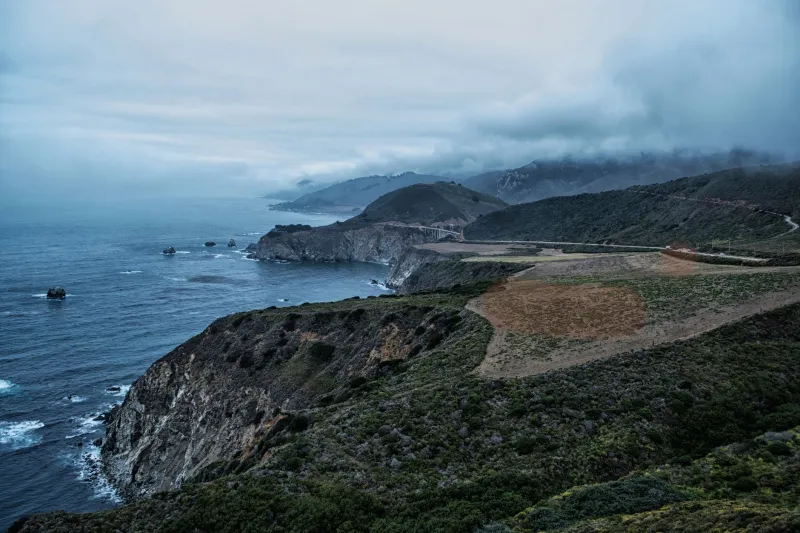
Something strange happens to a lot of people within the first twelve to twenty-four hours at Big Sur. They arrive expecting to exhale. They've driven down Highway 1, watched the cliffs open up, felt the salt air hit their face—and then, instead of melting into relief, they feel... off. Agitated. Weirdly sad. Maybe restless in a way they can't explain. Some people get a headache. Others feel the sudden, urgent need to check their phone, scroll something, do anything but just be in all that stillness.
And then a lot of them quietly wonder if something is wrong with them.
Nothing is wrong with them. In fact, something is working exactly as it should.
Your Nervous System Has Been Running a Con
Here's what most wellness marketing doesn't tell you: the dysregulated nervous system doesn't want to be regulated. Not at first. After months or years of chronic stress, your body has adapted to a state of high alert as its baseline. Cortisol pulses. Shallow breathing. Muscles braced. Thoughts cycling. This isn't dysfunction—it's your nervous system doing its job of keeping you functional inside a system that demands constant output.
When you remove that system suddenly—when you drop into a place like Big Sur, where the stimulation is slow and the silence is real and the horizon doesn't ask anything of you—your nervous system doesn't immediately say thank you. It says wait, what's the threat?
The technical term researchers use is "autonomic rebound." When the sympathetic nervous system has been dominant for a long time, a sudden shift toward parasympathetic activation can feel genuinely uncomfortable. Your heart rate variability changes. Blood pressure may briefly fluctuate. The body starts processing stored tension it had been too busy to touch. And the mind, unoccupied for the first time in weeks, starts surfacing everything it had been suppressing.
This is not failure. This is the flinch before the heal.
Why Intensity Accelerates the Discomfort
Big Sur doesn't ease you in gently. That's part of its power and part of why it can feel confrontational. The landscape is enormous. The cliffs are vertiginous. The ocean is loud and indifferent. The redwoods make you feel very, very small. There's no ambient background hum of civilization buffering you from the rawness of the place.
For a nervous system tuned to urban density—traffic noise, notification sounds, the low hum of fluorescent lights, the social pressure of being perceived—Big Sur's scale can register almost as threat before it registers as medicine. Your threat-detection system doesn't distinguish between "overwhelming because dangerous" and "overwhelming because healing." It just flags overwhelm.
Studies on nature immersion consistently show that the most significant physiological benefits—reductions in cortisol, improvements in immune markers, shifts in prefrontal cortex activity—tend to emerge after an initial adjustment window. That window varies. For some people, it's a few hours. For others, especially those carrying significant chronic stress loads, it can stretch into day two or even day three.
The people who leave early almost always leave inside that window.
The Psychological Layer Nobody Talks About
Beyond the physiology, there's something else happening when stillness gets uncomfortable: the stories we've been outrunning start catching up.
Busyness is one of the most effective avoidance strategies ever invented. When there's always something to do, something to respond to, some next thing to prepare for, the harder emotional material—grief, loneliness, unresolved anger, old fear—stays neatly in the peripheral. You can feel it there, but you don't have to turn and face it.
Big Sur removes the buffer. The coast doesn't hand you a task. The fog doesn't need a response. And so the thing you've been not-quite-feeling for six months suddenly has enough space to make itself known.
This can feel like the retreat is making you worse. It isn't. It's revealing what was already there, waiting for a moment quiet enough to be heard. The discomfort isn't the problem—it's the material that needed tending.
Practical Ways to Stay Through the Flinch
Knowing this in advance changes everything. When the restlessness hits, when the headache arrives, when you catch yourself manufacturing reasons to leave early, you can recognize it for what it is: the threshold. Here's how to stay on the right side of it.
Give it forty-eight hours before you evaluate. Make a deal with yourself before you arrive: the first two days don't count as data. You're in transition. Suspend judgment about whether it's "working" until your system has had time to actually shift.
Move your body early. Walking—especially along the coast, on uneven terrain, with your eyes up and your pace unhurried—helps the nervous system discharge stored tension faster than stillness alone. The body sometimes needs to move the stress out before it can settle into rest. A slow walk along the Pfeiffer Beach trail or through the redwoods at Julia Pfeiffer Burns State Park can metabolize what sitting quietly cannot.
Let the discomfort be information, not emergency. When something uncomfortable surfaces—emotionally or physically—try treating it as signal rather than problem. Ask it what it's carrying. You don't have to solve it. You just have to stop running from it long enough to acknowledge it's there.
Resist the urge to fill the silence. The phone, the podcast, the music—these are familiar tools for managing discomfort, and they'll feel very appealing in that first window. Using them isn't failure, but notice when you're reaching for them and ask whether you're regulating or avoiding. There's a difference.
Find one anchor in the landscape. A specific tree. A rock formation. A particular stretch of beach where the waves hit a certain way. Returning to that anchor across different times of day gives the nervous system a reference point—something consistent in an environment that can feel overwhelming in its scale.
The Land Has Done This Before
What Big Sur holds is not just beauty. It's a kind of metabolic patience. The cliffs have been watching the ocean do its thing for longer than anxiety has had a name. The redwoods have been standing through droughts and floods and fires and centuries of human noise. There is something in places like this that doesn't require you to arrive already healed. It just requires you to stay long enough to begin.
The flinch is real. The resistance is real. And it is not evidence that you are broken or that the medicine isn't working.
It is, in fact, evidence that something in you still knows how to respond to the real thing—and hasn't forgotten what it feels like to finally stop pretending you're fine.